Catálogo



Únicos
DA.TE Danza
2026
/ 42
min.
/ Small format
/ Dance
/ Dance theater
Age: 3-5
Languages: Castilian
Address: Omar Meza
Authorship: Omar Meza
Argument
Únicos es la espesura del bosque, ese en el que construimos, con tiempo y amor, nuestro yo interno como si de una obra de arte se tratara. Es también la creación
identitaria donde dos seres se encuentran y se reconocen como lo que son: únicos. ¿Cuándo dejamos de ser quiénes somos? ¿Cuánto peso tiene nuestra identidad social, política o cultural? ¿Somos lo que otros dicen que somos?
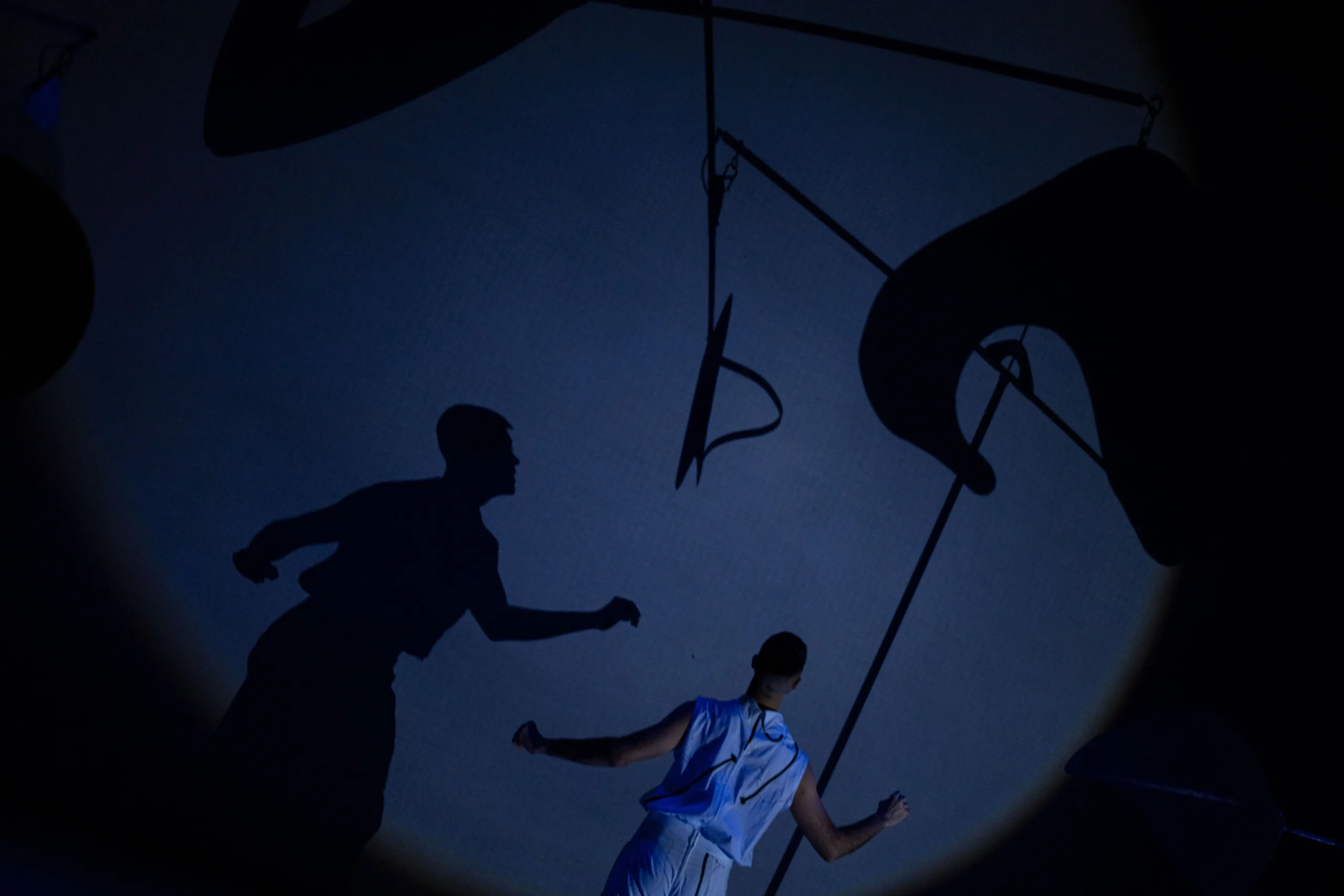
A estas preguntas se acerca Únicos, un espectáculo de danza contemporánea que propone de manera dinámica y fluida un viaje existencial. Únicos es, en
último término, la travesía que supone la creación identitaria como una obra de arte.
En Únicos, la identidad se abre paso como un cuerpo que aprende a habitarse. Dos seres buscan su lugar en el mundo, tanteando la forma de ser y de estar, de sostenerse sin perder el equilibrio. En ese espacio de lo incierto, la infancia se muestra como territorio fértil: ahí donde todo puede ser aún, donde la construcción del yo
no es una frontera, sino un descubrimiento continuo. La pieza se inspira en el pensamiento móvil de Alexander Calder, en esa forma de existir que se adapta al aire sin perder su centro. En diálogo con el universo de Calder, Únicos se transforma con cada encuentro. Nada permanece fijo: los cuerpos, el espacio, el tiempo… todo se transforma, buscando ese instante en que la identidad y la belleza se unen.
artistic team
Dirección del espectáculo: Omar Meza.
Dirección teatral: Concepción Villarubia.
Dramaturgy: Nieves Rodríguez
Bailarines y colaboración coreográfica: Álvaro Copado y Raúl Durán.
Diseño y construcción de escenografía: Fabián Huertes.
Musical composition: Jesús Victoria.
Lighting design: Aitor Palomo.
Diseño y ejecución de vestuario: Javier Lévon.
Asistencia coreográfica: Mª José Casado.
Dirección de producción y comunicación: Enrique Fernández.
Administración: Rosa Mª Marín.
Distribution: a+ Soluciones Culturales.
Acknowledgements: Juana Mª Escalona y Maribel Guijarro.
Agradecimientos Ayto. Armilla: Loli Cañavate, Pablo Arturo Cano, Victoria Sánchez Ramos, Ana Rivas, Rafa Cobos y Francisco Moles.


DA.TE Danza
Company / producer
Andalusia
Ownership: Private
DA.TE Danza celebrates 25 years of creating, producing, and exhibiting contemporary dance, dance theater, and object theater performances aimed at children and young people, spanning from early childhood to adolescence. With 28 premieres and more than 2,700 performances, DA.TE Danza is one of the longest-running dance companies in Andalusia, with a stable and rigorous structure, becoming a well-established project founded in 1999.
Since its inception, DA.TE Danza has been committed to work that prioritizes message over aesthetics. By this, we mean creating and producing shows that are committed to today's society, showing children and young people a story to reflect on. Its awards and special mentions include more than a dozen recognitions that honor the innovation and artistic quality of a team currently comprised of more than 15 people under the direction of its founder, Omar Meza, leaving an indelible mark on the national and international heritage and scene.
All of the company's projects enjoy the ongoing collaboration of the National Institute of Performing Arts and Music, part of the Ministry of Culture and Sport of the Government of Spain, and the Andalusian Agency of Cultural Institutions, part of the Ministry of Culture and Historical Heritage of the Regional Government of Andalusia.
Throughout its 25-year history, DA.TE Danza has promoted numerous social transformation and community mediation projects, consolidating its commitment to inclusion and cultural accessibility. Initiatives such as "Danzando Emociones," funded by the "la Caixa" Foundation's "Art for Change" program in 2003, have brought dance to young people with and without disabilities at the IES Alhambra in Granada. In addition, the company has held specific workshops for families, children, young people, teachers, seniors, people with disabilities, and inmates in prisons, promoting emotional development and well-being through the performing arts. These activities have not only fostered artistic expression but have also used dance as a tool for social and educational transformation, integrating the community into its work philosophy.